pCAM Production Influencing Processing Parameters
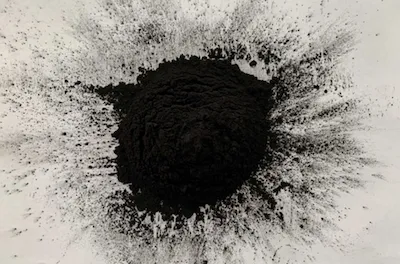
pCAM is key to ternary material production, because the quality directly determines the physical and chemical indicators of the final cathode. Therefore, production of ternary cathode material mainly relies on controlling the pCAM production process.
The morphology and composition of the coprecipitate can be significantly impacted by various controllable parameters during the coprecipitation process.
At present, most manufacturers prepare ternary pCAM with conventional particle sizes (10μm~15μm).
If the pCAM has a large specific surface area, it will lead to a decrease in the compaction and compaction density of the cathode material. Resulting in a decrease in lithium-ion battery energy density.
At the same time, the interface reaction between the cathode material and the electrolyte will intensify, and the battery cycle life will decrease.
On the other hand, due to the increase in gaps, there are more lithium ion transmission channels, and the battery rate performance is improved.
Key pCAM Processing Parameters Which Influence Production
| Influencing Factor | Influencing Effect |
| Ammonia Concentration | When there is no complexing agent, the pCAM has a loose morphology and a low tap density; when there is a complexing agent, the pCAM is dense and the tap density is increased. When the complexing agent is too high, there are too many complexed nickel and cobalt ions in the solution, which will cause incomplete reaction and make the ratio of nickel, cobalt and manganese in the pCAM deviate from the designed value. |
| PH Value | When the pH value is too high, the hydroxide cannot agglomerate into spheres and is a loose aggregate of primary grains; when the pH value is too low, the precipitates are severely aggregated, with different morphologies and large differences in the size of secondary particles. |
| Reaction Temperature | Temperature mainly affects the reaction rate. In the actual production process, we hope that the chemical reaction rate is as fast as possible while ensuring the quality of the pCAM. However, the temperature cannot be too high, as it will cause oxidation of the pCAM. |
| Reaction Time | Within a certain period of time, the particle size, tap density and reaction time of the pCAM are directly proportional, but the reaction time should not be too long, otherwise the pCAM particles will be too large. |
| Reaction Atmosphere | Without nitrogen protection, the pCAM morphology is blocks and agglomerates of varying sizes. |
| Solid Content | The solid content affects the morphology of the pCAM. The solid content of the pCAM in the reactor of most manufacturers is around 5-10%. |
| Flow Rate | The flow rate mainly refers to the flow rate of the metal salt solution, which is directly related to the output. Therefore, under the premise of ensuring the quality of the pCAM, the larger the flow rate, the better. |
| Impurities | A small amount of organic solvent (extractant in the preparation process of nickel sulfate and cobalt sulfate) will cause the pCAM particles to fail to grow and have a non-spherical morphology. Another type of impurity in the raw materials, such as Ca2+ and Mg2+, will cause adverse effects such as non-spherical shape and low tap density. |
1. Ammonia Concentration
Ammonia used as a chelating agent forms complexes with transition metal ions in the solution and then gradually reacts with hydroxide ions to form single-phase precipitates.
Its main function is to control free metal ions by complexing metal ions (M(NH3)n2+) which slows down the disturbance of the precipitation equilibrium caused by the addition of raw materials, controls the supersaturation of the precipitate in the solution, and reduces the rate of nucleation and growth, allowing the crystal to grow slowly.
Ammonia concentration affects the tap density since it affects the uniformity and size distribution of the particles. Ammonia prevents phase separation and result in a dense, homogenous, and uniform shape metal hydroxide precursor, which leads to increased tap density without sacrificing the specific capacity.
The number of NH4+ ions, or the molar ratio of NH4+ ions to transition metal ions, plays an important role in particle morphology and size.
1.1 Ammonia Concentration (too low)
Too low ammonia concentration will cause the nucleation rate to increase and irregular small particles will be formed instead of the uniform spherical particles.
A low ammonia concentration will lead to looser and porous particles, poorer compactness, the gaps between materials will increase, which will lead to too large specific surface area and low tap density.
With increasing NH3 concentration the tap density increases and secondary particle of spherical shapes becomes more uniform with narrow particle size distribution.
1.2 Ammonia Concentration(too high)
Too high ammonia concentration can be detrimental to the particle morphology, leading to the formation of ‘clusters’ with non-uniform particle sizes and shapes.
Too high ammonia concentration will cause the particles to be too large, resulting in more gaps between materials, which will lead to too large specific surface area.
This is associated with complex ions [e.g. Ni(NH3)6] being formed so that not all M2+ ions are precipitated (e.g. decreasing the precipitation rate of nickel) thus metal composition deviations occur in the precursor.
The tap density is 2.32 g/cm3 at 0.4 NH3/MSO4 molar ratio (where M = Ni, Mn, Co) and decreases to 0.97 g/cm3 at 2.5 NH3/MSO4 molar ratio where particles become quasi-spherical or random in shape with non-uniform particles size distribution.
The specific surface area and tap density show a parabolic change with the change of ammonia concentration. In order to meet the requirements for battery materials, the ammonia concentration needs to be controlled at 5-9g/L.
2. pH Value
The involvement of metal ammonia complex compounds can be influenced by the pH value so pH regulation is necessary. The appropriate pH value will control the amount of complex compound required. The pH of the system is determined by the ammonia to sodium hydroxide solution ratio and can dictate the degree of transition metal precipitation.
The effect of pH on the properties of the NCM ternary precursor not only impacts the chemistry of different species that form in the solution but also controls the nucleation and growth. Therefore, it affects the particle size distribution and influences the volumetric capacity and energy density of lithium-ion batteries as the tap density of the material is closely related to particle morphology, particle shape, and size.
2.1 Adjusting the pH
The pH value during the precipitation process directly affects the nucleation and growth of crystal particles and by adjusting the pH value the morphology of primary and secondary particles of the pCAM can be controlled. If the pH value is out of control during the reaction, and the pH value is too high or too low, the product quality will drop sharply and form unqualified products.
When the pH value is low, due to the low supersaturation in the solution, the growth rate of the pCAM particles is greater than its nucleation rate, and primary crystals are thicker and larger. Increasing the pH will increase the amount of OH– so that the supersaturation increases. This causes the rate of nucleation and crystal growth to increase. However, at a certain higher pH value, the nucleation rate will increase rapidly beyond the crystal growth rate so that many small nuclei are formed and primary crystals are thin and small.
The impact on secondary particles is if the pH value is low, secondary particles are prone to agglomeration, resulting in secondary spheres of irregular shape and if the pH value is high, secondary particles are mostly spherical.
To ensure the number of hydroxide ions during the reaction, the pH of the general coprecipitation is set to more than 9. At a pH of more than 12, the number of complex compounds is very small so the coprecipitation reaction should be carried out in the pH range of 9-12.
As the pH value of the precipitation increases, the primary particles are gradually refined, the sphericity of the particles becomes better, and the tap density of the precursor sample gradually increases.
3. Reaction Control of Ammonia Concentration and pH Value
The pH variable solubility of each transition metal complex [M(NH3)n]2+ (where M = Ni, Co, Mn) means there is an optimum pH value which varies depending on the NMC ratio.
When the ratio of nickel, cobalt and manganese is 111, 424, 523, 622, 701515, and 811, the ammonia concentration and reaction pH value required to prepare pCAM with a tap density between 2.2-2.3g/cm3 and similar particle size distribution need to be slightly adjusted. With the increase of the nickel content of the pCAM, the required ammonia and reaction pH value are increased accordingly.
At the same time, the morphology of the pCAM prepared at different pH values is also different. The primary grains of NCM111, which requires a lower nitrogen concentration and reaction pH value, are thick flakes. As the nickel content of the material increases, the primary grains become smaller and smaller.
4. Reaction temperature
Temperature mainly affects the rate of chemical reactions, thus affecting the particle growth rate and morphology. Only the appropriate crystallization temperature can produce a uniform morphology and a body structure that meets the requirements of high-nickel materials.
The temperature should be as high as possible without affecting the reaction. In general, an increase in temperature will increase the reaction rate. Too high temperature will lead to the nucleation reaction being inhibited and crystal growth will dominate. Too low temperature will lead to dominant nucleation and secondary crystal growth. The pH will increase as the temperature decreases, so it is also important to maintain a constant temperature.
The presence of manganese limits the application of temperatures higher than 60oC because of its high potential to easily oxidize manganese to MnOOH, MnO(OH)2, MnO2, or Mn3O4. Increasing the temperature from 45 to 50oC can change the shape of the primary particles from needle-like to plate-like, thus increasing the tap density. Coprecipitation at room temperature is likely to slow down the formation of secondary spherical particles as the particles are irregular and agglomerated. Hydroxide coprecipitation is generally carried out at 50-60oC.
5. Reaction Time
The morphology of the precursor is greatly affected by the precipitation time or reaction time. A longer reaction time results in the structure being more ordered hexagonal, improvement in the crystallinity and therefore higher capacity retention and electrochemical performance in general. The longer the reaction time the smoother and more spherical the particles become. Also, the size distribution decreases.
It takes a certain amount of time for the particle size and tap density of the pCAM to reach the pre-determined values. Under normal circumstances, to obtain a pCAM with a D50 greater than 10μm and a tap density greater than 2.0 g/cm3, the reaction time must be at least greater than 20 hours.
Within a certain period of time, the particle size, tap density and reaction time of the pCAM are proportional. However, the reaction time cannot be too long. Excessive reaction time will make the pCAM particle size too large and have an adverse effect on the quality of the pCAM, and after a certain period of time, the tap density of the pCAM also tends to increase slowly.
6. Reaction Atmosphere
The precipitation atmosphere mainly affects hydroxide coprecipitation as multiple unwanted phases can be formed in the presence of oxygen due to the oxidation of Ni2+ and Mn2+ ions. The charge in the oxidation state can lead to the formation of layered double hydroxide, which incorporates intercalated anions such as NO3-, CO32- or SO42- to compensate for the charge.
During the second step of the precursor preparation, these anions can release toxic gases, which can be problematic on an industrial scale. If the dissolved oxygen in the pure water used in the pCAM reaction is not removed, or the reaction slurry is directly exposed to air during the reaction, the pCAM slurry will be severely oxidized, and its colour will be dark brown or black.
These unwanted phases can be avoided by precipitating the precursors in an inert atmosphere. The crystal structure of pCAM reacted under air atmosphere and the pCAM under nitrogen protection is very different. The ternary pCAM prepared without nitrogen protection has the morphology of blocks of different sizes and their agglomerates and the tap density of the product is very low.
7. Solid Content
Solid content refers to the ratio of the solid mass to the liquid mass of the pCAM slurry during the pCAM reaction process. Different solid contents have a certain impact on product performance. Increasing the solid content of the slurry can optimize the product morphology and increase the tap density of the product.
Compared with the case of 10% solid content, the morphology of the product at 20% solid content is more regular, and the surface of the secondary particles is denser. High-nickel pCAM is prepared at high solid content, with good particle density, better sphericity, more concentrated particle size distribution, and blurred primary particle boundaries. At present, the solid content of the pCAM in the reactor of most manufacturers is about 5%~10%.
8. Stirring Rate
The stirring intensity directly affects the mixing effect of the liquid. The stirring intensity is related to the stirring speed and stirring form. The faster the stirring speed, the better the mixing effect and has a greater impact on the crystallization process. The stirring rate can accelerate the collision between particles, and between particles and the precipitation reactor wall, which facilitates the formation of homogeneous spherical particles and improves tap density.
In terms of mixing, the type of impeller blade impacts the nature and direction of the mixing (radial, axial or both) and determines the distribution of particles and homogeneity of the system. The type of the impeller blade can impact the tap density and particle size of the cathode precursors due to the direction of the fluid flow through the blade.
At a low stirring rate particles are agglomerated irregularly, loosely packed, and the tap density is relatively low. The tap density of the high-nickel precursor gradually increases with the increase of the stirring speed. However, after the stirring speed is greater than 300rpm, the tap density tends to be stable. It is more appropriate to control the stirring speed of the reactor system between 300 and 360rpm.
9. Flow Rate
Flow rate refers to the flow rate of the metal salt solution which is directly related to output. The larger the flow rate, the better the quality of the pCAM. The maximum flow rate that a reactor can achieve is not only related to the reaction process, but also to the volume of the reactor, the internal structure of the reactor, and the motor power of the reactor.
10. Impurities found in pCAM
Organic extractants such as 260# solvent oil, P204 and P507 are used in the preparation of nickel sulfate and cobalt sulfate. If organic extractants remain in them, they will be brought into the reaction system, causing the pCAM particles to fail to grow, D50 and tap density to fail to reach the expected values, and the morphology to be non-spherical. Another type of impurity that the raw materials will bring in is Ca2+, Mg2+, etc., whose precipitation pH value and precipitation coefficient are quite different from those of nickel, cobalt and manganese, causing more negative effects on the reaction, such as the pCAM morphology is not spherical and the tap density is very low.
The higher the oil content of the liquid, the lower the tap density, the morphology of the pCAM becomes loose, unable to form a ball, resulting in the inability of particles to grow and a wide particle size distribution. If high-nickel pCAM with a high tap density is to be obtained, the oil content of the liquid needs to be controlled at <5ppm.
For more blog articles click here
To view GDC market research reports click here
About us
GDNM provides commentary on how energy transition minerals contribute towards the decarbonisation and electrification of the global economy, with a particular focus on the lithium-ion battery and rare earths supply chains.
GDNM founder, Mr Brendan Jephcott is an Australian who has worked in the global mining sector for more than 13 years, of which his experience covers precious metals, nonferrous metals, ferrous metals, base metals, bulk commodities, rare earths, and the lithium-ion battery industry.
For the last 9 years Mr Jephcott has focused on the burgeoning new energy industry, participating in cross-border transactions in buy-side and sell side roles, cultivating a global business network ranging from upstream resource companies, midstream intermediate product producers, and downstream consumers such as gigafactories and auto companies.