Is Solid-State Electrolyte Holding Back ASSB’s Future?
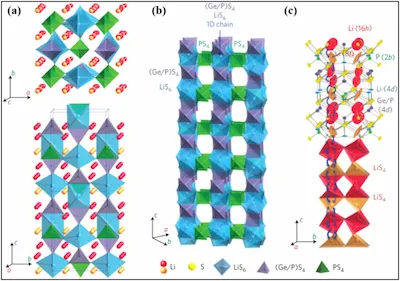
The current cost of solid-state electrolyte, a key material for all-solid-state batteries, is relatively high. In addition to polymer electrolytes, oxide and sulfide solid electrolytes still need to wait for further cost reduction. It is estimated the cost of electrolytes for the three routes:
- Polymer solid electrolyte: While polymer solid electrolyte offers good flexibility and processability, it has several limitations such as temperature dependency (room temperature ionic conductivity is insufficient, requiring operation at 60-80°C with thermal management systems), it has a limited electrochemical window (<4V) preventing its use in high-voltage cathode materials, insufficient mechanical strength to prevent lithium dendrite growth, low lithium ion migration numbers and its estimated raw material cost is 10,000 to 20,000 CNY per tonne, which is basically the same as traditional electrolyte used today.
- Oxide solid electrolyte: Oxide solid electrolyte offers good chemical stability, however it is stiff and brittle which creates interface contact problems and difficulty maintaining permanent contact between layers, furthermore, its production method requires high temperatures (400-1300°C), with optimal performance above 800°C, which can damage cathode active materials, it reacts badly with lithium metal (making it require some coating) and its estimated raw material cost is about 100,000 to 300,000 CNY per tonne.
- Sulfide solid electrolyte: Despite having the highest ionic conductivity among solid electrolyte materials, sulfide solid electrolyte faces challenges such as air instability, a narrow electrochemical window, interface reactions, high production requirements (must be processed in inert atmosphere), and its current selling price is as high as tens of millions of CNY per tonne, mainly because the synthesis process of lithium sulfide precursor Li2S is not yet mature. After the precursor process breakthrough and the scale effect appear, it is estimated that the raw material cost of sulfide solid electrolyte is expected to drop to 118,500 CNY per tonne in the long term.
| Electrolyte | Raw Material | Unit Consumption (tonne/tonne) | Price (CNY/tonne) | Unit Cast Cost (CNY/tonne) |
| Polymer PEO | PEO | 0.84 | 7,500 | 6,300 |
| Lithium salt | 0.16 | 54,000 | 8,640 | |
| Raw material cost | 10,000-20,000 | |||
| Current selling price | / | |||
| Oxide LATP | Ammonium dihydrogen phosphate | 0.9 | 5,500 | 4,950 |
| Lithium carbonate | 0.13 | 74,000 | 9,620 | |
| Aluminium oxide | 0.04 | 4,000 | 160 | |
| Titanium dioxide | 0.35 | 15,000 | 5,250 | |
| Raw material cost | ~20,000 | |||
| Current selling price | Approx. 10,000-30,000 | |||
| Sulfide LPSCI | Lithium sulfide | 0.34 | 275,000 | 93,500 |
| Phosphorus pentasulfide | 0.58 | 10,000 | 5,800 | |
| Lithium chloride | 0.24 | 80,000 | 19,200 | |
| Raw material cost | 118,500 | |||
| Current selling price | Tens of millions |
Solid-state electrolyte is hindering mass production
The manufacturing process of all-solid-state batteries is immature, and the yield still needs to be further improved, which brings additional manufacturing costs. The challenges faced by all-solid-state battery manufacturing are mainly:
- The core of the all-solid-state battery manufacturing process is the composite film formation of electrolyte and electrode, and the corresponding manufacturing process is not yet mature.
- The all-solid-state electrolyte preparation and battery cell manufacturing process require pressurization, which brings additional manufacturing costs.
- The stress problem caused by the volume expansion of solid electrode materials will also bring manufacturing difficulties and yield defects.
- Water-based processing is impossible for most solid electrolytes, requiring organic solvents and alternative binders
- Sulfide electrolytes require completely inert, anhydrous environments, dramatically increasing equipment requirements and costs
- Both oxide and sulfide solid electrolyte materials require pressing treatment to improve mechanical contact, adding manufacturing steps
In addition, the production of thin, defect-free solid electrolyte films remains a critical bottleneck. Current manufacturing can achieve 20-40 micron thickness, but maintaining uniformity and avoiding cracks during batch production presents significant yield challenges. The thickness control directly impacts energy density – thicker films reduce energy density while thinner films compromise mechanical properties and may cause short circuits.
However, under the current challenges of immature manufacturing process and yield problems, the cost of all-solid-state batteries is relatively high. After considering the long-term yield improvement, it is estimated that the long-term all-solid-state cost to be 0.69 CNY per Wh.
| 1 GWh Consumption (tonnes) | Unit Price (CNY/t) | Unit Cash Cost (CNY/Wh) | |
| Cathode | 1450 | 142,000 | 0.21 |
| Anode (LI Metal) | 90 | 880,000 | 0.08 |
| Solid Electrolyte | 1200 | 140,000 | 0.17 |
| Copper Foil | 550 | 80,000 | 0.04 |
| Aluminium Foil | 450 | 30,000 | 0.01 |
| Other | 0.02 | ||
| Total Material Cost | 0.53 | ||
| Manufacturing and Other Costs | 0.16 | ||
| Product Yield | 100% | ||
| Future Expected Cell Cost | 0.69 | ||
Concluding Thoughts
The challenges with solid electrolyte materials represent a complex interconnection of fundamental scientific limitations, manufacturing complexities, and economic barriers. While significant commercial progress has been made in individual areas, such as achieving liquid-electrolyte-comparable ionic conductivity in some sulfide materials.
The simultaneous resolution of all these challenges for mass production remains the primary obstacle to ASSB commercialisation. The industry’s current focus on semi-solid approaches represents a pragmatic interim solution while these fundamental challenges are addressed through continued research and development investment.
For more blog articles click here
To view GDC market research reports click here
About us
GDNM provides commentary on how energy transition minerals contribute towards the decarbonisation and electrification of the global economy, with a particular focus on the lithium-ion battery and rare earths supply chains.
GDNM founder, Mr Brendan Jephcott is an Australian who has worked in the global mining sector for more than 13 years, of which his experience covers precious metals, nonferrous metals, ferrous metals, base metals, bulk commodities, rare earths, and the lithium-ion battery industry.
For the last 9 years Mr Jephcott has focused on the burgeoning new energy industry, participating in cross-border transactions in buy-side and sell side roles, cultivating a global business network ranging from upstream resource companies, midstream intermediate product producers, and downstream consumers such as gigafactories and auto companies.